
Introduction
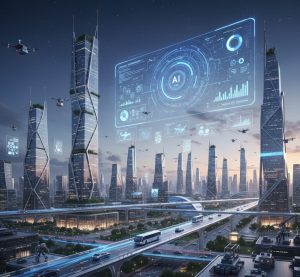
The Future of Smart Automation Now a days has become a wonderful dream into a driving force behind modern innovation. From self-driving cars to space exploration, AI is the name of power of a new generation of autonomous missions that can think, learn, and act independently. These missions are reshaping industries, redefining efficiency, and pushing the boundaries of what machines can do without direct human control.
What Is an Autonomous Mission?
An autonomous mission refers to any task or operation carried out by intelligent systems without continuous human intervention. This includes drones surveying disaster zones, robots exploring other planets, and ships navigating vast oceans using AI algorithms. The core idea is to create machines that can sense their environment, make decisions, and execute actions with minimal or no human assistance.
How AI Powers Autonomous Missions
AI enables smart automation through a combination of technologies such as:
Machine Learning (ML): Helps systems learn from experience and improve decision-making over time.
Computer Vision: Allows machines to interpret and understand visual data from cameras or sensors.
Natural Language Processing (NLP): Enables human-like communication and command interpretation.
Reinforcement Learning: Trains AI agents to achieve complex goals through trial and reward-based learning. These technologies together make autonomous systems capable of operating efficiently in unpredictable environments — from deep space to deep sea.
Real-World Applications
Space Exploration: NASA’s Mars rovers use AI to navigate the Martian terrain, analyze rocks, and make decisions when communication with Earth is delayed.
Defense and Security for smart automation: Autonomous drones can perform reconnaissance or surveillance missions safely and efficiently.
Healthcare: Robotic surgery systems are becoming more autonomous, performing delicate operations with AI-guided precision.
Agriculture: AI-driven drones and tractors monitor crops, detect diseases, and optimize irrigation without human presence.
Transportation: Self-driving vehicles are transforming urban mobility by reducing accidents and improving traffic flow.
Ethical and Safety Challenges
While the benefits of AI by smart automation are vast, they come with challenges. Questions about accountability, safety, and ethics remain critical. Who is responsible if an autonomous drone causes damage? How do we ensure AI systems don’t make biased or dangerous decisions?
Establishing transparent frameworks and ethical AI governance is essential to build public trust in autonomous technologies.
The Future Ahead
The next decade will witness exponential growth in autonomous missions by smart automation. AI will guide underwater robots to explore unknown marine ecosystems, manage smart cities, and even make interplanetary communication faster and safer. The collaboration between human intelligence and artificial intelligence will define the new frontier of innovation.
Conclusion
Artificial Intelligence is not just an enhancement — it’s a revolution. Autonomous missions represent humanity’s bold step toward a future where intelligent systems work alongside humans to explore, protect, and improve our world. As AI continues to evolve, the line between human control and machine autonomy will blur, ushering in an era of limitless possibilities.
FAQ – Artificial Intelligence and Autonomous Missions
1. What is an autonomous mission in Artificial Intelligence?
An autonomous mission is a task or operation performed by intelligent systems that can make decisions and act without continuous human control. Examples include AI-driven drones, self-driving cars, and robotic space explorers.
2. How does Artificial Intelligence make machines autonomous?
AI uses machine learning, computer vision, and decision-making algorithms to enable machines to sense their environment, analyze data, and take independent actions based on learned experiences.
3. Where are autonomous missions used in real life?
Autonomous missions are used in many sectors — such as space exploration (NASA rovers), healthcare (robotic surgery), agriculture (AI drones), defense (surveillance drones), and transportation (self-driving vehicles).
4. What are the challenges of AI-based autonomous systems?
The main challenges include ethical issues, safety concerns, data privacy, and accountability. Ensuring that autonomous AI systems make fair, transparent, and safe decisions remains a global priority.
5. What is the future of Artificial Intelligence and autonomous missions?
In the future, AI-powered systems will explore oceans, manage smart cities, and even participate in interplanetary communication. The collaboration between humans and intelligent machines will define the next era of global innovation.
References
- National Aeronautics and Space Administration (NASA). Artificial Intelligence and Robotics in Space Exploration.
https://www.nasa.gov - Stanford University. Artificial Intelligence and Autonomous Systems Research Papers.
https://ai.stanford.edu - IEEE Spectrum. The Future of Autonomous Machines and AI Ethics.
https://spectrum.ieee.org - MIT Technology Review. How AI Is Powering the Next Generation of Robotics.
https://www.technologyreview.com - World Economic Forum. AI and the Future of Autonomous Systems: Opportunities and Risks.
https://www.weforum.org
To know news of Domestic and Abroad by clicking our website: https://bdnewslink.com/